The 2013 York Christian Apocrypha Symposium in Retrospect: Part Two
In the first afternoon session, “New Frontiers in Christian Apocrypha Studies,” we looked to bridging gaps between CA and related disciplines. In “Jesus at School among Christians, Jews, and Muslims,” Cornelia Horn (Catholic University of America) built on her previous work on Christian and Muslim use of Jesus and Mary infancy traditions. This time her discussion featured the story of Jesus in school from the Infancy Gospel of Thomas and looked at its transformations in the Armenian Infancy Gospel, the Toledot Yeshu, and the story of Imam al-Baquir in Umm al-kitab (an eighth-century Shi’ite text). In her conclusion, Horn asked us to consider the status of texts like Umm al-kitab—does its connection to apocryphal Jesus stories make it a Christian apocryphal text, or an Islamic apocryphal text, or something else?
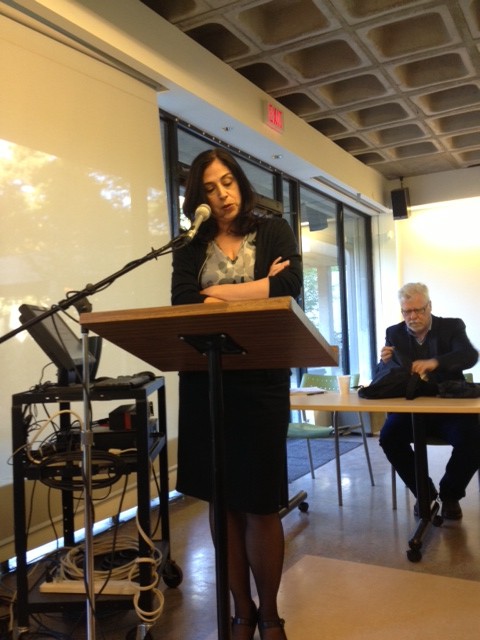 Nicola Denzey Lewis (Brown University) followed with dynamic presentation, “Nag Hammadi, Gnosticism, Apocrypha: Bridging Disciplinary Divides.” The paper points out how scholars have divided Gnostic texts from other apocrypha—“high” vs. “low” literature, the CA are folkloric but Gnostic texts are “the ugly, wicked stepsisters in the fairytale of NT studies.” The divide is most apparent at conferences like the SBL Annual Meeting, which separates Nag Hammadi or Gnostic Studies from Christian Apocrypha, despite the fact that some Nag Hammadi texts are not Gnostic (e.g., the Acts of Peter and the Twelve Apostles) and some Gnostic texts are not from Nag Hammadi (e.g., the Pistis Sophia, the Gospel of Mary); one text in particular, the Gospel of Thomas, seems to transcend all boundaries we try to put on it. Denzey Lewis echoes the call by other scholars to redraw these boundaries, to classify all the texts as “early Christian literature” and then focus on sub-genres such as apocalypse, romance, or gospel.
The final paper of the session was “Debating Canon Formation: Why and Where Scholars Disagree” by Lee Martin McDonald (Institute for Biblical Research). McDonald has written extensively on the canon, and seems to show no signs of slowing down; but his work has not been effectively brought into discussions of the CA, despite the fact that canon is very important for studying non-canonical texts. His paper touches on several aspects of his previous work that I see as vitally important, including his position that the Muratorian Canon is a product of the early fourth, not second, century, his view of the development of the western canon (it clearly was not settled in the fourth-century), and his distinction between the “Canon 1” stage (a trial run when church writers were trying to establish authoritative texts) and “Canon 2” (a fixed or limited collection of sacred writings). He states (rightly) also, that “a fixed text of the New Testament was never physically possible until the invention of the printing press,” and makes the provocative point that, thanks to electronic media, we are living in a time much like the first few centuries when we can pick and choose the texts we value, and without any sense of having to limit a corpus to the mechanics of book production.
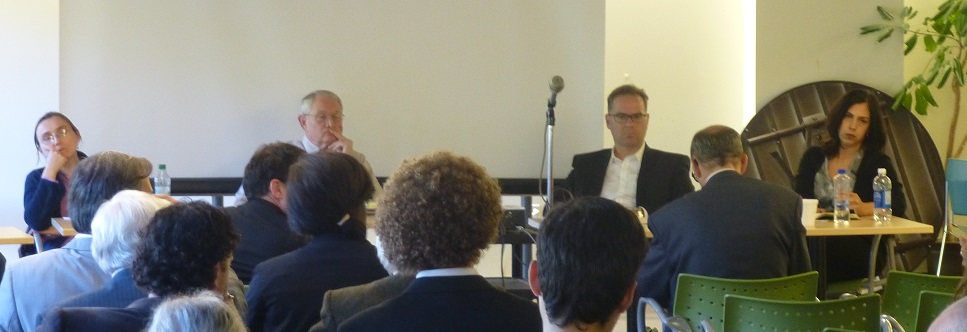
The session concluded with a response by Lorenzo DiTommaso (Concordia University) to the two papers available in draft (Denzey and McDonald). In an early stage of the planning process, we invited DiTommaso to present on Christian Old Testament Pseudepigrapha—another category of texts rarely discussed in connection with Christian Apocrypha. His schedule did not allow him time to write a paper, but we were pleased to have him attend the Symposium and offer his thoughts on the other papers of the session.
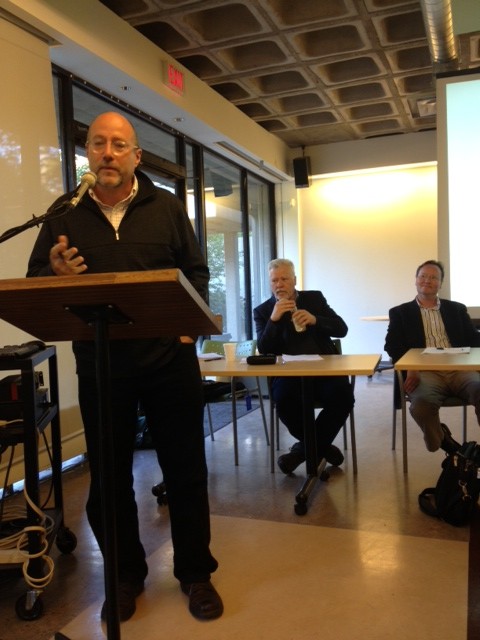 After a short break, the Symposium resumed with a session focused specifically on North American scholarship’s interest in the Christian Apocrypha for studying the Historical Jesus. Stephen Patterson, known for his work on the Gospel of Thomas and his position that the text is an early repository of teachings of Jesus, provided a re-evaluation of work in this area—indeed it was a re-evaluation of his own previous positions. He began his discussion on a surprisingly skeptical note declaring “the apocryphal gospels have had virtually no impact on the historical study of Jesus in North America,” and adding later, “or on any other continent for that matter.” The synoptic Jesus, he said, is still the focus of historical Jesus work. Nevertheless, Patterson spent the rest of his time making a case for a cluster of sayings of Jesus from the Gospel of Thomas that were not accepted by the Jesus Seminar—the group having to do with primordial androgyny (e.g., log. 22, “When you make the two one…”). He remarked that scholars tend to dismiss the apocryphal gospels as “more speculative, mystical, ascetical, enigmatic, or just downright confusing” and asks “should this necessarily disqualify them completely from the discussion?” Patterson then made a case for a Jesus interested in androgyny via an unconventional route: reconstructing the teaching of John the Baptist through Apollos, Paul’s rival in Corinth who “knew only the baptism of John” (Acts 18:25; cf. 1 Cor 1: 10-31). Along the way Patterson also considered the baptizing, secretive Jesus of Secret Mark, and the Jesus who supports castration in Matt 19:12. In the end, Patterson advocated casting our nets wide when examining the historical Jesus, stating, “The question is not, after all, which of the gospels best represents the historical Jesus. The question for critical scholarship is how to imagine an historical figure from which could emanate all of the various traditions and interpretations that appear in the first century or so of nascent Christian development.” Patterson’s paper was followed by two responses, one from John Kloppenborg (University of Toronto), known particularly for his work on Q, and Mark Goodacre (Duke University), who has recently joined CA scholarship with his book Thomas and the Gospels: The Case for Thomas’s Familiarity with the Synoptics (reviewed HERE).
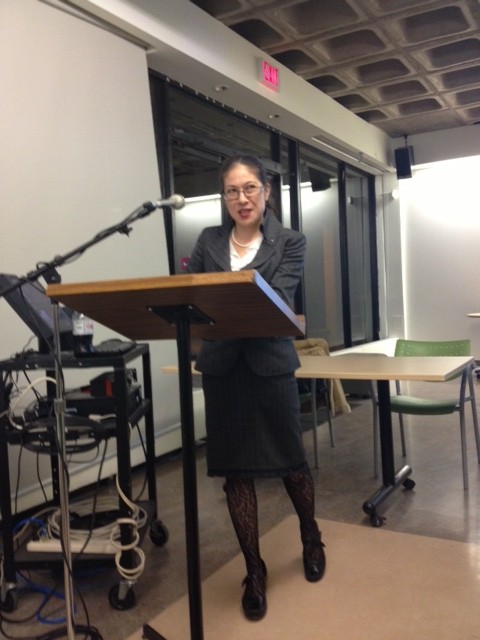 Day one came to a close with a keynote address from Annette Yoshiko Reed (University of Pennsylvania). She titled her presentation, “The Afterlives of Christian Apocrypha.” It touched on a range of topics, spanning from early scholarship on the texts to modern use of CA imagery in popular culture, particularly Manga (with examples from Neon Genesis Evangelion and others). Reed noted that the creators of Manga know little about Christianity and simply pluck whatever ideas they think useful for their stories. Only when western distributors take issue with the content do the creators realize that they are using controversial apocryphal imagery. After a spirited discussion, the presenters and audience members broke for the night, to rest up for day two of the Symposium.
To be continued…
Thanks again for organizing such a great event, Tony, and nice to see the conference pics and paper summaries – although note that the anime title is “Neon Genesis Evangelion” 🙂
Fixed. Thanks Annette.