2017 ISBL Preview: “‘Arabic’ Infancy Gospel No More”
I am about to depart for the 2017 International Meeting of the Society of Biblical Literature in Berlin. Slavomír Céplö and I will be presenting at the first of four Christian Apocrypha sessions; for a full listing of the Christian Apocrypha papers at this year’s ISBL see this post. The paper, entitled “‘Arabic’ Infancy Gospel No More: The Challenges of Reconstructing the Original Gospel of the Infancy,” has two aims: to present the current status of our work on the Arabic Infancy Gospel (aka Gospel of the Infancy), and to interact with the session’s theme of “Is this a ‘text’?” (questioning practices of how we title texts and if these titles capture the dynamic, fluid natures of verbal communication). Here is the abstract for the paper:
The Arabic Infancy Gospel (Arab. Gos. Inf.) was first published by Henry Sike in 1697, long before many of the apocryphal texts that now dominate the study of Christian Apocrypha. Only one other edition of the text has appeared in the intervening centuries: from a much-different and likely-superior manuscript at the Biblioteca Laurenziana. Additional manuscripts exist but no one, as yet, has evaluated these witnesses. Nor has there been much effort to integrate into the study of this text the East Syriac History of the Virgin, which shares a large portion of material with Arab. Gos. Inf. This paper presents the results of careful analysis of the manuscript sources for both texts and offers some preliminary observations about how best …
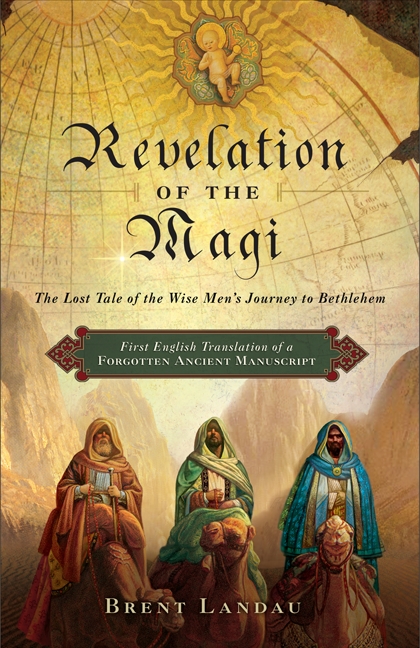 This particular book is directed at a popular audience. The goal of it is primarily to provide a readable version of the text. The introductory materials, then, are somewhat sparse but are enough to set the text in its historical and literary contexts. Brent also adds some details about how he came to be interested in the text and his efforts to discover more about it.
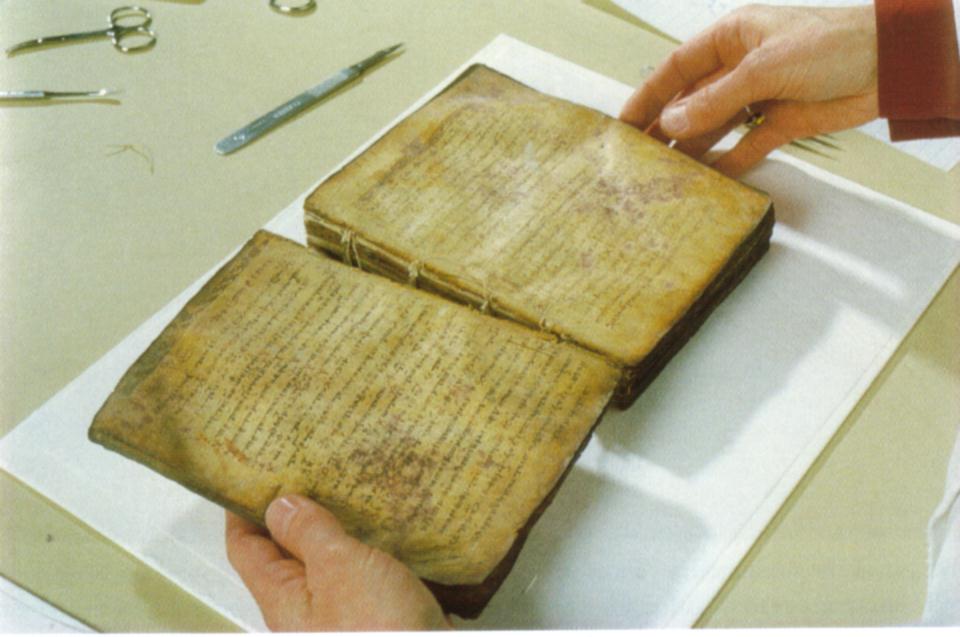
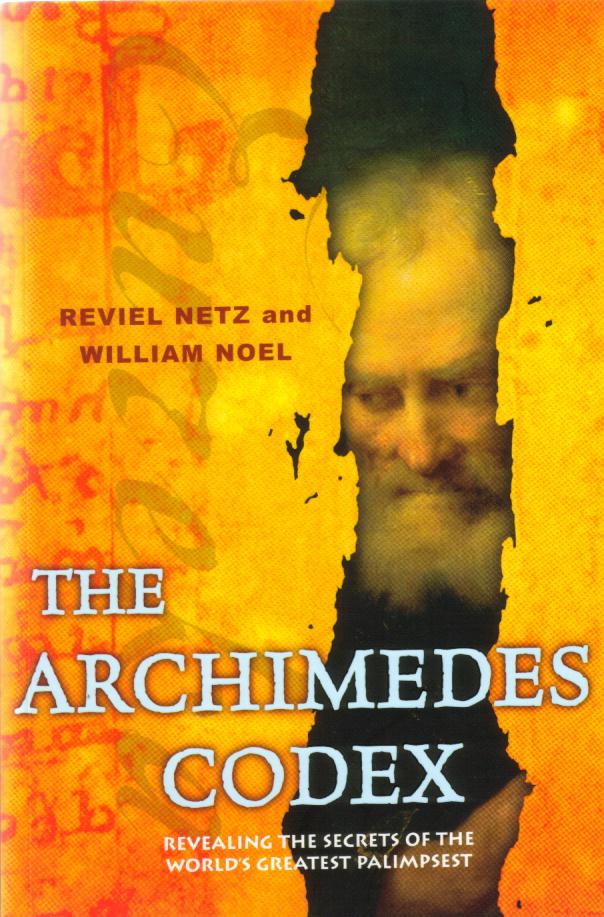 Recently I finished reading Reviel Netz’s and William Noel’s The Archimedes Codex: Revealing the Secrets of the World’s Greatest Palimpsest. The book details the acquisition of a thirteenth-century Christian prayer book that contains, as its underwriting, several works by the third-century BCE Greek mathematician Archimedes. One of these works, Floating Bodies, is found in no other source. But in some places the underwriting is incredibly difficult to read. The Archimedes Codex describes the pioneering scientific efforts to recover Archimedes’ works.
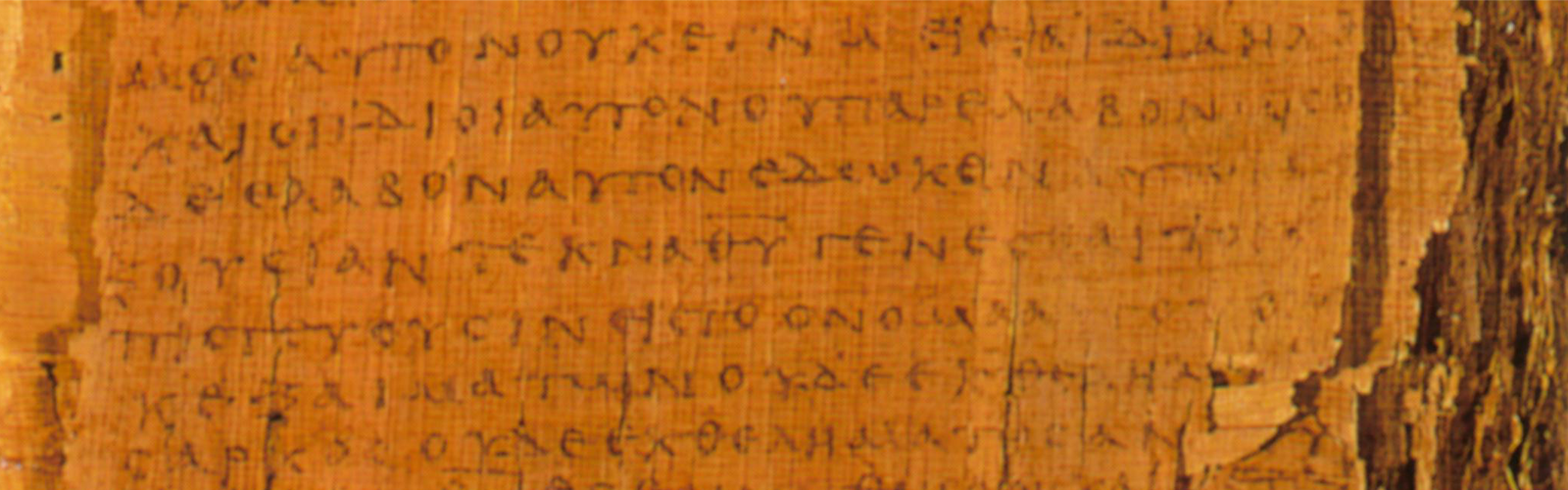
  The manuscript is important for the study of Infancy Thomas as it is the earliest known source we have for the text; unfortunately, only a handful of pages from the original manuscript were used by the eighth-century recycler. Virtually all of this material is readable (save for a few lines on two folios). …
 In Fall 2008 moviegoers will be able to see a film adaptation of Anne Rice’s Christ the Lord: Out of Egypt (read the press release