Re-imagining Canon in the Twenty-first Century: SRCA Talk February 10
I have been invited to speak at the University of Toronto at their Seminar for Culture and Religion in Antiquity. My current research interest is the formation of the New Testament and the resulting categorization of Christian writings as either canonical or non-canonical. I will use the opportunity of the presentation to solidify some of my thoughts on the topic. For more information, visit the SRCA web site. Here is the abstract for the presentation:
Monday, February 10, 4–6pm
Tony Burke, York University
"What Do We Mean by “The Bible”? Re-imagining Canon for the Twenty-first Century"Recent discussion of the formation of the New Testament canon ranges from the liberal leanings of historical-critical scholarship—typified by the view that political and pragmatic motivations contributed to the selection of texts—and the conservative standpoints of theologians—who see the hand of the Holy Spirit at work, guiding the processes of both composition and canonization. Neither of these opposing poles fully take into account the fluidity of the NT canon. Over the centuries Christians have ignored the boundary line between canonical and non-canonical texts. And the contents of the NT varies both temporally and geographically. So, the very terms “canonical” and “non-canonical” are inadequate for categorizing Christian literature. This talk will outline the complexities involved in the study of the NT canon and considers new approaches for understanding interactions among different forms of Christian literature, throughout history and into the future.
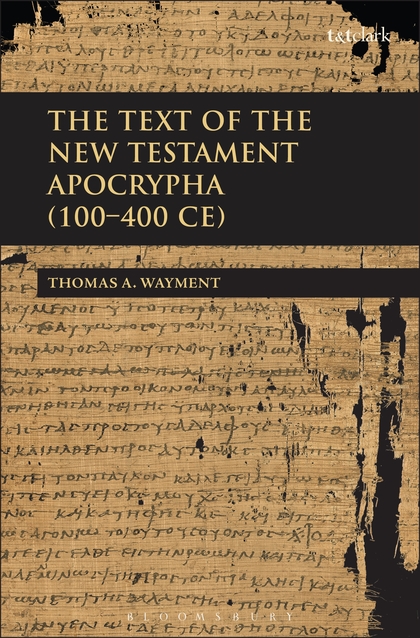 Each chapter of the book focuses on a single text (e.g., the Didache, the Gospel of Mary) or a group of texts (Acts of the Apostles, Sayings Gospels) and provides a bibliography, orthographic notes, and critical editions (not merely transcriptions) of each manuscript. The back half of the volume contains photographs of each manuscript, the majority in colour. The images vary in quality—P. Bodmer V and X, for example, are clear and gorgeous to look at, but P. Oxy 840 is reproduced too small and the reverse side of each page bleeds through the papyrus, making the text difficult to read.