Book Review: The Lost Novel of King Solomon and the Demons
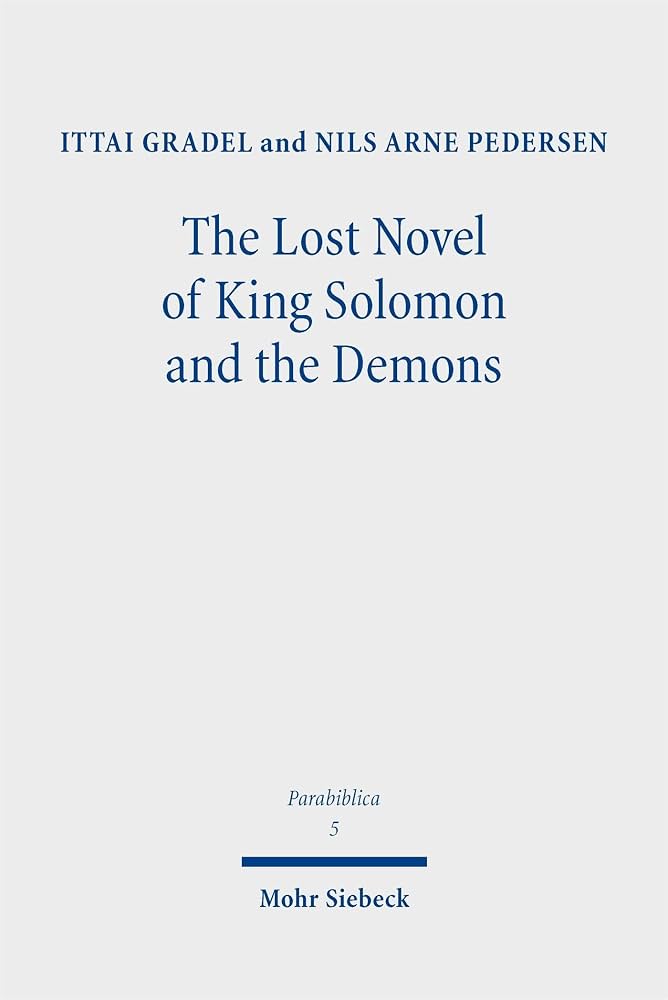 Artifacts related to Christian Apocrypha are exciting to discover. In them we see how apocryphal traditions are applied outside of or alongside the texts and get a sense of their impact on people’s lives. So it was a pleasure to be given the opportunity to read Ittai Gradel and Nils Arne Pedersen’s new book, The Lost Novel of King Solomon and the Demons: New Evidence on the Testament of Solomon in Antiquity (full disclosure: a copy was sent to me for review). Not only does it feature a discussion of ten rings related to TSol but also an argument for using them to determine the text’s original form, function, and authorship.
First, what is the Testament of Solomon? It is an Old Testament Pseudepigraphon extant in 26 Greek manuscripts (at last count). It was first published from a sixteenth-century manuscript (Paris, Bibliothèque nationale de France, gr. 38; = P) by Ferdinand Florens Fleck in 1837. An English translation by F. C. Conybeare followed in 1898. Additional manuscripts were made known and a new edition created by C. C. McCown in 1922. The edition is eclectic (drawing on various manuscripts) but is based primarily on another sixteenth-century witness (Oxford, Bodleian Library, Holkham gr. 82; = H). McCown’s edition has become the standard resource on the text and was used for Dennis C. Duling’s translation in James Charlesworth’s Old Testament Pseudepigrapha (1:935–87).
In McCown’s edition, the text opens with Solomon as he works on constructing his temple (1–2). The master workman’s …