On “The Heresy of Orthodoxy,” Part Four
In this final post of my critique of Andreas J. Köstenberger’s and Michael J. Kruger’s The Heresy of Orthodoxy: How Contemporary Culture’s Fascination with Diversity has Reshaped our Understanding of Early Christianity (Wheaton, ILL: Crossway, 2010) I focus on K&K’s chapter on the Christian Apocrypha: “Establishing the Boundaries: Apocryphal Books and the Limits of Canon.”
This chapter asks the question, “whether the diversity of apocryphal literature threatens the integrity of the twenty-seven-book canon as we know it” (152). Again, K&K are challenging the pop-scholarship of Bart Ehrman which asserts that all Christian texts, canonical and non-canonical, are equal, that some apocryphal texts could easily have made it into the canon. K&K justifiably, I think, criticize Ehrman for a statement he makes in Lost Christianities in this regard: “But where did [the New Testament] come from? It came from the victory of the proto-orthodox. What if another group had won? What if the New Testament contained not Jesus’ Sermon on the Mount but the Gnostic teachings Jesus delivered to his disciples after his resurrection? What if it contained not the letters of Paul and Peter but the letters of Ptolemy and Barnabas? What if it contained not the gospels of Matthew, Mark, Luke, and John but the Gospels of Thomas, Philip, Mary, and Nicodemus?” (Ehrman, p. 248). Ehrman’s point is sound, that the New Testament represents the views of one particular group (or several likeminded groups) in early Christianity; whether or not they are a group with greater claims of …
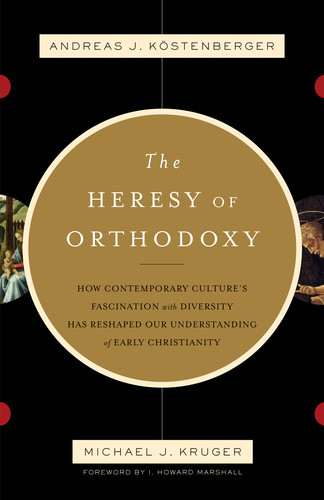 This is the first in a series of posts on Andreas J. Köstenberger's and Michael J. Kruger’s recent book, The Heresy of Orthodoxy: How Contemporary Culture’s Fascination with Diversity has Reshaped our Understanding of Early Christianity (Wheaton, ILL: Crossway, 2010). It is one of a number of books written in reaction to works by scholars (particularly Bart Ehrman) associated with the “Bauer school”—i.e., influenced by Walter Bauer’s landmark book Orthodoxy and Heresy in Earliest Christianity (Rechtgläubigkeit und Ketzerei im ältesten Christentum, originally published in 1934). I suppose that I, too, would be considered a member of this “school”; so, I am very interested in critiques of Bauer’s work and those who have followed in his footsteps. Also, I have written previously, both here and in print, on examples of what I have called anti-Christian Apocrypha apologetic. And K&K’s book certainly falls into that category.
 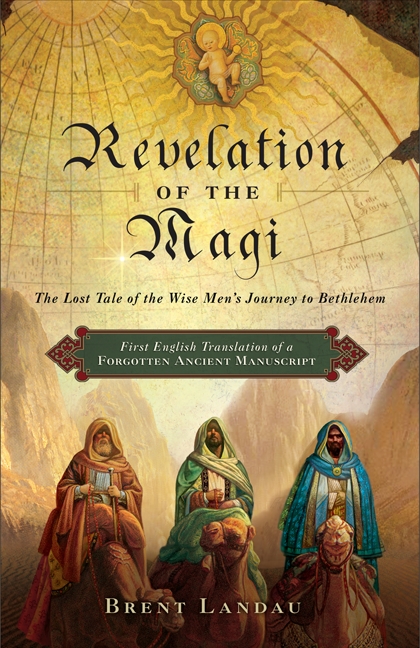 This particular book is directed at a popular audience. The goal of it is primarily to provide a readable version of the text. The introductory materials, then, are somewhat sparse but are enough to set the text in its historical and literary contexts. Brent also adds some details about how he came to be interested in the text and his efforts to discover more about it.