On “The Heresy of Orthodoxy,” Part Three
I resume my critique of the Andreas J. Köstenberger’s and Michael J. Kruger’s The Heresy of Orthodoxy: How Contemporary Culture’s Fascination with Diversity has Reshaped our Understanding of Early Christianity (Wheaton, ILL: Crossway, 2010) with the final chapter of the first section of the book: “Heresy in the New Testament: How Early Was It?” The chapter essentially minimizes the observable differences between various texts within the NT and among early Christian leaders (Peter, Paul, James). I am not going to argue with K&K much on this topic, except to say that the interpretation of the evidence depends on one’s presuppositions, for the most part, about the book of Acts. Early in their discussion, they say, “Assuming the historical accuracy of Luke’s account…” (p. 75). Doing so leads to an opinion of the early church and its leadership as harmonious and united. My own view is that Acts is a relatively late text (80 CE at the earliest but possibly even later) that has little interest in an accurate portrayal of the early history of the church. Acts minimizes the conflicts that we see more transparently in Paul’s letters; thus, one who considers Acts reliable will be inclined also to minimize these conflicts.
However, my primary objection to this chapter is with the assumptions K&K attribute to proponents of the Bauer-Ehrman thesis. They complain strongly about the “anti-supernatural bias in Bauer’s historical method” (102). “What we are arguing,” they write, “is that the Bauer-Ehrman thesis is wrong not just because these …
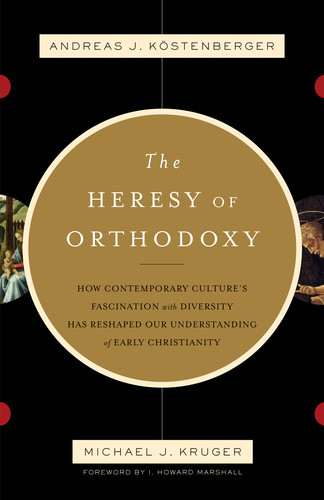 This is the first in a series of posts on Andreas J. Köstenberger's and Michael J. Kruger’s recent book, The Heresy of Orthodoxy: How Contemporary Culture’s Fascination with Diversity has Reshaped our Understanding of Early Christianity (Wheaton, ILL: Crossway, 2010). It is one of a number of books written in reaction to works by scholars (particularly Bart Ehrman) associated with the “Bauer school”—i.e., influenced by Walter Bauer’s landmark book Orthodoxy and Heresy in Earliest Christianity (Rechtgläubigkeit und Ketzerei im ältesten Christentum, originally published in 1934). I suppose that I, too, would be considered a member of this “school”; so, I am very interested in critiques of Bauer’s work and those who have followed in his footsteps. Also, I have written previously, both here and in print, on examples of what I have called anti-Christian Apocrypha apologetic. And K&K’s book certainly falls into that category.
 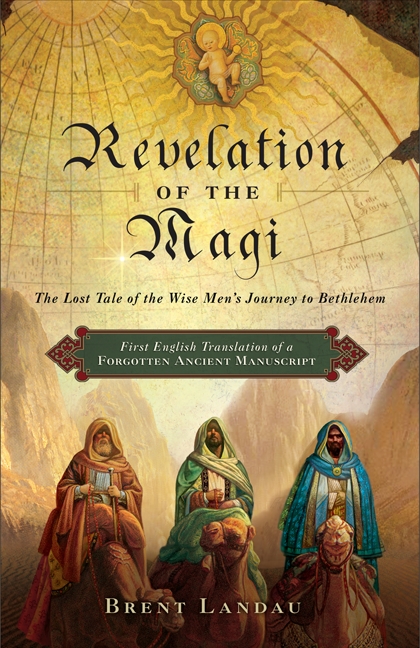 This particular book is directed at a popular audience. The goal of it is primarily to provide a readable version of the text. The introductory materials, then, are somewhat sparse but are enough to set the text in its historical and literary contexts. Brent also adds some details about how he came to be interested in the text and his efforts to discover more about it.