Four Uncatalogued Apocrypha Manuscripts from Mount Sinai
Update: the National Library of Israel responded to my query about the origins of their manuscript images. They were part of the same photographing initiative as the Library of Congress, though the library gave the date of this enterprise as 1968, not 1949–1950.
The St. Catherine’s Monastery in the Sinai is well-known as a goldmine of manuscripts—almost 2300 of them in Greek alone, and another 1000 or so in other languages. Its library has yielded such treasures as the Codex Sinaiticus and the Codex Syriacus, along with a number of important manuscripts of apocryphal texts. And it seems to keep giving. In 1975 a number of new leaves and fragments—the so-called “New Finds”—were discovered during the renovation of the tower in the monastery’s north wall. And new technology is being used by the Sinai Palimpsests Project to read the underwriting of reused manuscripts. Recently I made some “new finds” of my own when looking for digitized manuscripts for the NASSCAL project Manuscripta apocryphorum.
The Sinai manuscripts were catalogued in piecemeal fashion in the late nineteenth century. A full list of all the manuscripts, prior to the New Finds, was completed by Murad Kamil in 1970. But this is not a catalogue with full descriptions of each item; Kamil gives only a few lines of information, often describing the manuscripts as simply “Theological Treatises” or “Lives of Saints.”
In 1949–1950 a group of organizations and private scholars joined together to perform a full-scale examination of the monastery’s holdings. The Library of …
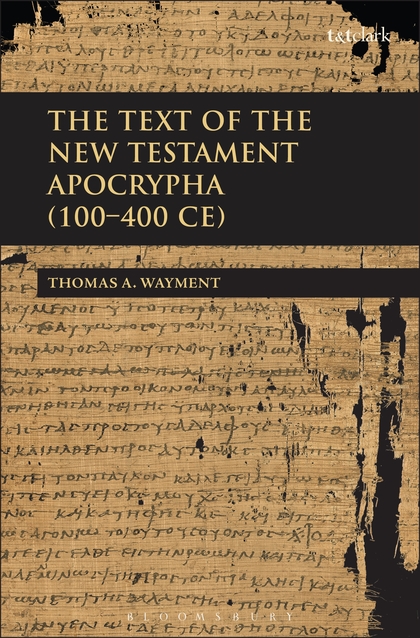 Each chapter of the book focuses on a single text (e.g., the Didache, the Gospel of Mary) or a group of texts (Acts of the Apostles, Sayings Gospels) and provides a bibliography, orthographic notes, and critical editions (not merely transcriptions) of each manuscript. The back half of the volume contains photographs of each manuscript, the majority in colour. The images vary in quality—P. Bodmer V and X, for example, are clear and gorgeous to look at, but P. Oxy 840 is reproduced too small and the reverse side of each page bleeds through the papyrus, making the text difficult to read.