More Responses to “Heresy Hunting”
Rob Bowman has posted two new responses to my Heresy Hunting in the New Millennium article from the latest issue of SBL Forum. The first addresses my point that the modern apologists tend to disparage the apocryphal texts as bizarre by seizing upon one or two aspects of the texts despite the fact that much of the texts are otherwise benign (thinking specifically here of Gospel of Thomas and Gospel of Peter). I stated in the article: “Such focus on the ‘bizarre’ elements of the texts misrepresents their contents. There is plenty of material in the canonical texts that is bizarre or objectionable but it would be unfair to characterize Acts simply on the basis of the cursing stories, or Luke on Jesus’ disappearing act (4:30) or the sweating of blood (22:43-44), or John on its anti-Semitism.” Rob’s second post deals specifically with Anti-Semitism in John.
Rob’s posts argue that the examples I cite of “bizarre elements” in the canonical texts are not so bizarre and the charge of Anti-Semitism in John is unsubstantiated. He concedes, however, that many readers and commentators have struggled with these issues; and I think that is sufficient for my argument. These are troubling aspects of the texts, whether or not they can be tamed by exegetical athletics. Similarly, some of the “bizarre elements” in Gos. Thom. and Gos. Pet. can also be tamed or explained if one takes the time to do so. It is unfair, I think, to label Gos. Thom.…
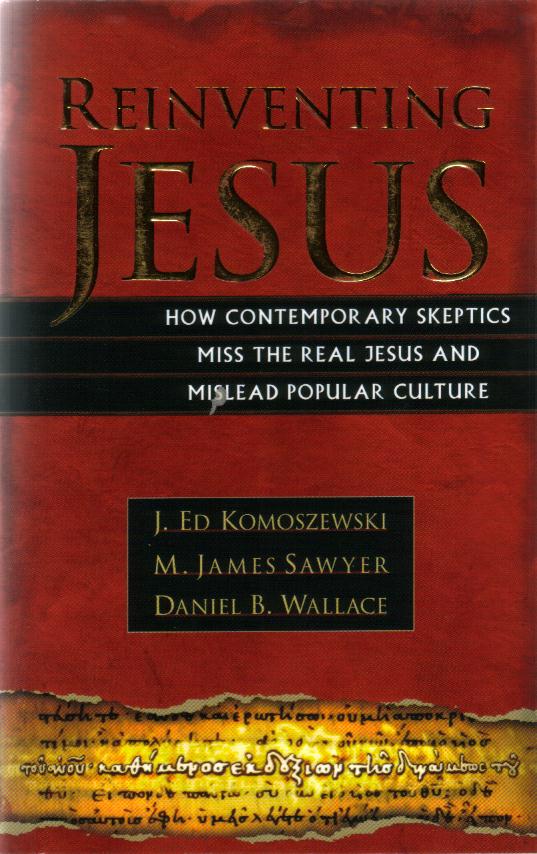 Though the furor over The Da Vinci Code has died down, books refuting its claims about the Christian Apocrypha continue to be published. One of the most recent of these is Reinventing Jesus: How Contemporary Skeptics Miss the Real Jesus and Mislead Popular Culture (Grand Rapids, Mich.: Kregel Publications, 2006) by J. Ed Komoszewski, M. James Sawyer, and Daniel B. Wallace. Like its ilk, Reinventing Jesus is apologetic—i.e., it is aimed specifically at defending Christianity from its critics—and therefore allows evidence to take a back seat to the promotion of orthodoxy. I’ve read enough of these books now that the arguments no longer surprise me. I am frustrated, however, by the authors’ lack of knowledge about the CA texts and the scholarship at which they take aim.
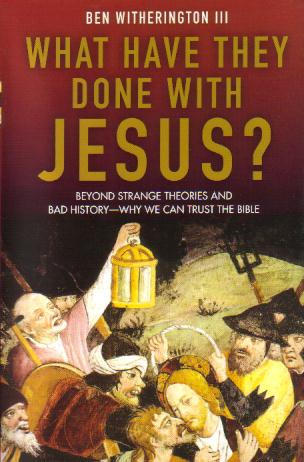 One of my on-going research projects involves tracing how the CA are received by scholars and the general public. I have posted here before on some anti-CA apologetic books (including Craig Evans’ Fabricating Jesus, discussed