Movie Review: The Carpenter’s Son (2025)
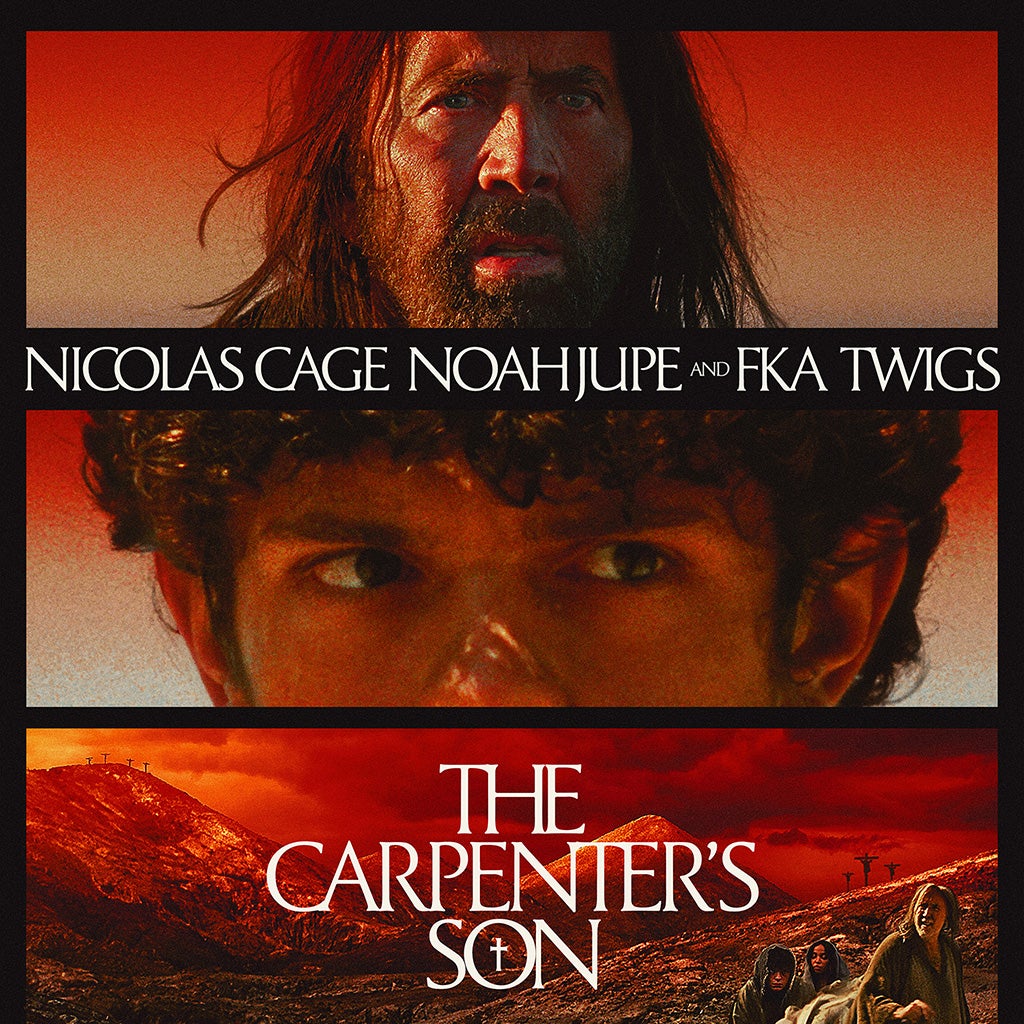 When I heard about The Carpenter’s Son, a film said to be based on the Infancy Gospel of Thomas, I was excited. This was going to be the culmination of my life’s work. Everyone will want to know what I think of the adaptation. I’ll be a star. Well, the film was released in late 2025 to minor controversy and little box office returns. Here in Canada, it went right to streaming. No one, it seems, cares.
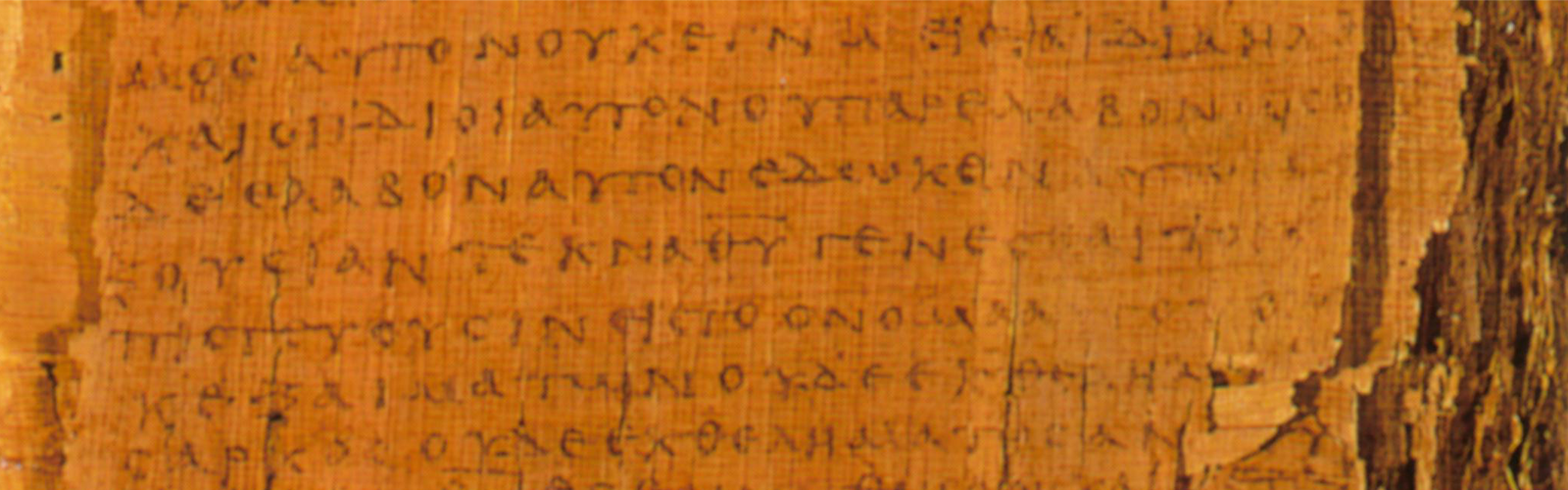
Except me, and a handful of students who joined me to watch the film last week. Our interest, of course, was to examine how the film utilizes the stories and themes of the apocryphal text. First, though, what is the Infancy Gospel of Thomas? It is one of the earliest apocryphal Christian texts—by which is meant a text that features stories and/or teachings of Jesus but was not selected for inclusion in the New Testament. Scholars generally date Infancy Thomas in the middle to late second century. It was composed in Greek but it is extant also in translations into Syriac, Latin, Old Irish, Georgian, Arabic, Ethiopic, and Church Slavic. It was certainly a popular text. But a bit unorthodox. Here is a summary based on its most well-known form.
In the introduction, Thomas the Israelite Philosopher states that he composed the text to tell Gentiles about what Jesus did as a child in Nazareth. Jesus is introduced as a five-year-old boy playing at a stream. His first act is a water miracle: he creates pools and makes them clean “simply by speaking a word.” Then he takes mud from the pools and creates 12 sparrows. Irate that Jesus is working on the sabbath, a Pharisee urges Joseph to reprimand the boy, but when he does, Jesus brings the sparrows to life with some magical words. The son of Annas the scribe (and future high priest) disturbs the pools of water, thus angering Jesus; in response Jesus curses the boy and his body withers. The scene concludes with the boy’s parents telling Joseph to teach Jesus to bless and not to curse. In the next episode, Jesus strikes dead a boy who runs into him in the marketplace and then blinds the townspeople who criticize him for it. Exasperated by his son’s behavior, Joseph takes him to a teacher named Zacchaeus to civilize him. Zacchaeus begins to teach him the alphabet, but Jesus displays wisdom beyond his years with an arcane interpretation of the letter alpha. Zacchaeus is humbled and declares “what kind of great thing he could be—whether a divine being or an angel—I do not know even what to say.” In response to this concession, Jesus restores those he has cursed (8).
Several beneficent miracles follow: he raises a boy to life after he falls to his death from a roof, heals a man with an injured foot, produces a great harvest from a small amount of seed (11), stretches a beam of wood in his father’s carpentry shop, and carries water home to his mother in a cloak. All goes well until Joseph takes Jesus to another teacher. Obstinate once more, Jesus refuses to repeat the alphabet so the teacher strikes him on the head. In response, Jesus curses the man and he falls down dead. A third teacher, however, recognizes Jesus’ wisdom and sends him home with his father. Jesus now returns to using his powers for good, healing his brother James from a snakebite, resuscitating a baby, and healing a man who had fallen from a ladder. The text concludes with a retelling of Luke’s account of the twelve-year-old Jesus astounding the doctors in the temple .
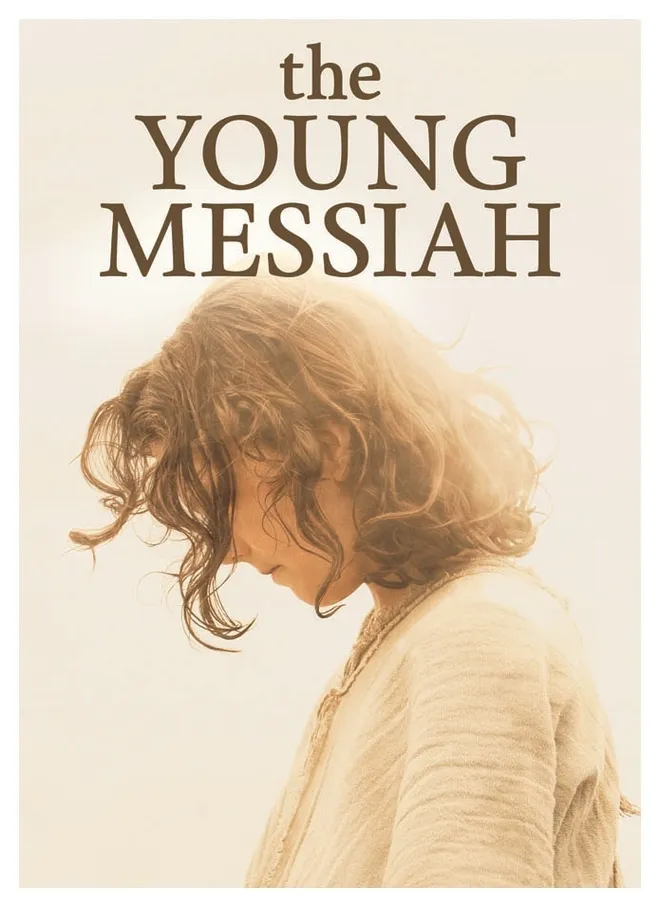 The Carpenter’s Son is not the first film to draw inspiration from Infancy Thomas. The Young Messiah (2016; dir. Cyrus Nowrasteh), an adaptation of Anne Rice’s 2005 novel Christ the Lord: Out of Egypt, also uses scenes from the text, but the stories are tamed of their challenging elements: Jesus doesn’t actually curse anyone. Several other films include the story of the animation of the sparrows: A Child Called Jesus (1987; dir. Franco Rossi), Jesus (1999; dir. Roger Young), and the Book of Clarence (2023; dir. Jaymes Samuel). But unlike these previous films, The Carpenter’s Son is not a devotional biography, it is marketed as a biblical horror film—perhaps the first of its kind—so the filmmaker potentially felt more free to embrace the troubling content of the gospel.
Certainly the film delights in imparting a sense of dread, with plenty of darkness, chilling music and sound effects, blood and gore, and demonic imagery. It begins with the birth of Jesus in a cave (as in the Protevangelium of James). The mother (let’s call her Mary, though she is never named), screams in agony while the father (I guess that’s Joseph) stands back, a look of fear or concern on his face. There are no Magi, no star, no shepherds, no angels singing Alleluia. The family leave the cave, passing soldiers who take babies from their mothers and throw them on a fire. Jesus (the boy, though later Joseph does call him Yeshua) survives because he is hidden in the donkey’s saddlebag. As they travel, Joseph passes a writhing, screaming demoniac. This is a dark, frightening world.
When next we see the family, fifteen years have passed. They enter a village in Egypt; still on the move, hiding from Herod’s soldiers. Of course, they needn’t have worried since Herod would have died a dozen years earlier. A voiceover from Joseph reveals they have been in hiding for years; he says “He threatens their gods with his presence; there is a power he cannot understand, a power I cannot contain.” Perhaps this is meant to evoke the falling of idols in the Gospel of Pseudo-Matthew and other infancy tales. The family finds a home and settles into the village, with Joseph taking on work as a carpenter, carving an idol for a temple.
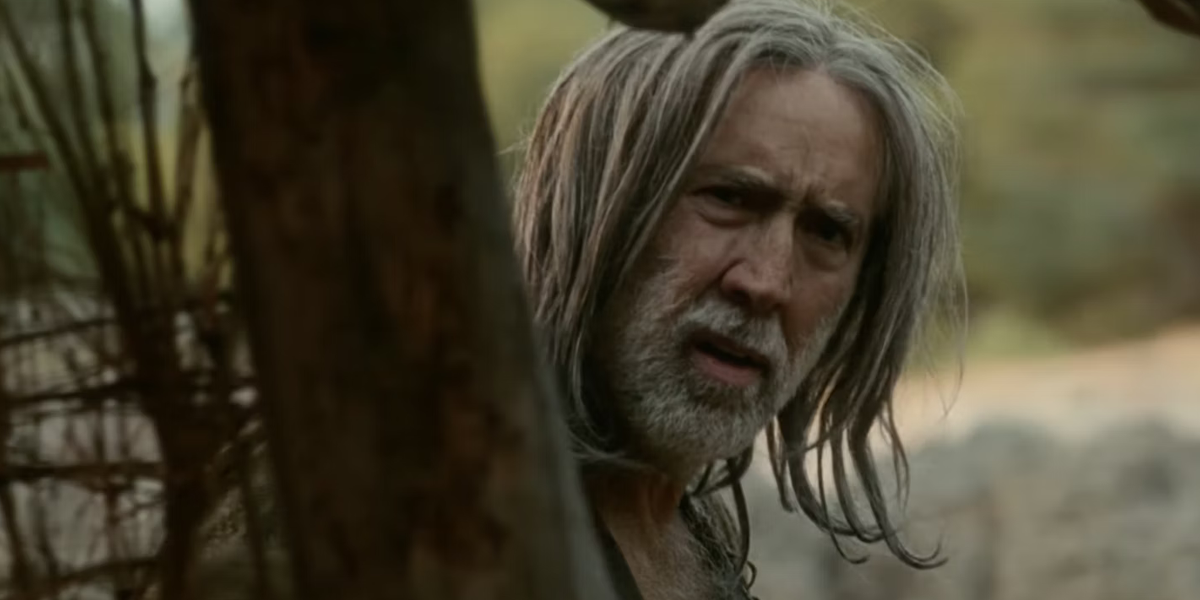 Joseph is played by Nicolas Cage with much angst. He is constantly concerned about protecting Jesus from the forces of “the king” as well as sin and impurity. Though he was told in a dream about his son’s special nature, he is plagued with doubts because God no longer speaks to him. At one point he accuses Mary of siring Jesus with a Roman soldier (recalling the Panthera slander attributed to Celsus and other sources). Mary, played by singer FKA Twigs, is given little dialogue, but is confident in her son’s divinity. Where Joseph is severe with Jesus, Mary is affectionate.
At this point you might be thinking, how is this like Infancy Thomas? My students were wondering the same thing. The stories in Infancy Thomas take place in Nazareth, not Egypt, and they take place when Jesus is between the ages of 5 and 12, not 15. Don’t despair, the film finally turns to the gospel when Joseph sends Jesus to help a local rabbi. At the rabbi’s outdoor school, Jesus meets Satan in the guise of a young woman (Isla Johnston in the film’s standout performance). The two leave the school and happen upon a leper. Satan tricks Jesus into touching him and later it is revealed that Jesus’ touch healed the man. This sends Jesus on a quest to discover who he is and where he came from.
The temptation of Satan and the healing of a leper are two aspects of Jesus’ adult life that are foreshadowed in the film. We also meet Legion, who possesses the family’s neighbour, a young woman named Lilith, and Jesus experiences frequent nightmares of his forthcoming crucifixion. Such foreshadowing is a trope of infancy tales—for example, Jesus’ breaking of sabbath laws when animating the sparrows. So the film at least has thematic affinities with its source material.
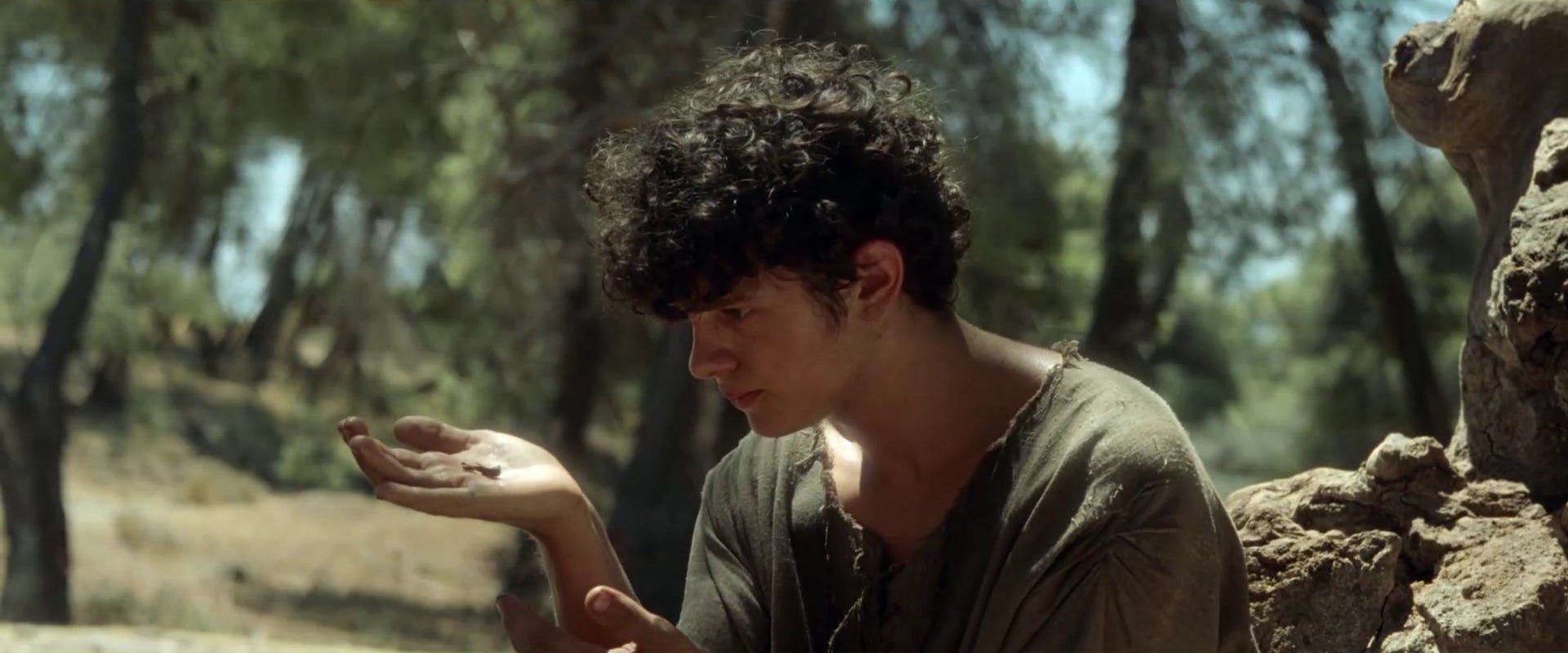 More explicit evocations of Infancy Thomas follow. Jesus plays with a cricket, inadvertently crushing it in his hand, but then restores it to life (thus evoking the animation of the sparrows), the rabbi drags him by the ear home to Joseph, accusing the boy of sorcery because “he spoke of things no one should know” (Jesus tells Joseph, “I told him how many years he will live,” recalling Jesus’ exchange with onlookers at the start of his encounter with Zacchaeus in Infancy Thomas 6), Joseph is bitten by a snake and is then healed by Jesus (as in Jesus’ healing of James), and when the villagers come after Jesus, he strikes another teenaged boy dead so that he cannot alert others to his location (just as Jesus struck down a boy in the marketplace and one of his teachers).
Admittedly, the parallels to Infancy Thomas are somewhat weak. None of the teenaged Jesus’ actions are as shocking and bewildering as those performed by the boy Jesus. Indeed, the juxtaposition of Jesus’ youthful innocence and his willingness to harm others makes the gospel’s stories all the more frightening. As one student noted, in The Carpenter’s Son, Jesus comes across like a young Clark Kent in the TV series Smallville—gradually learning about his powers and wondering about his true origins.
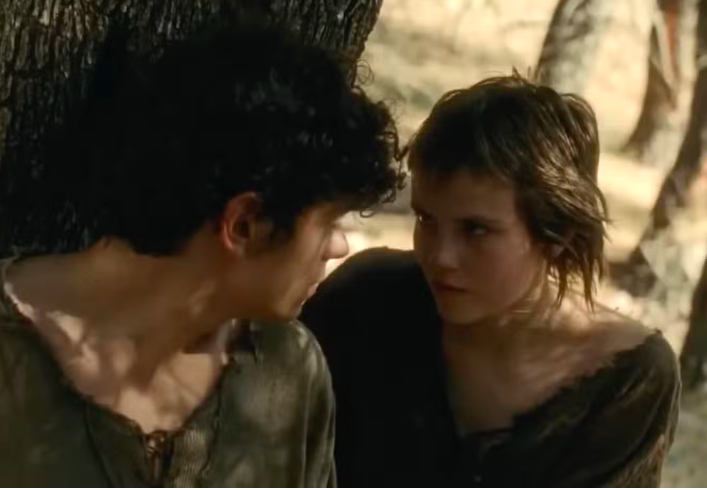 The most interesting scenes in The Carpenter’s Son feature Jesus’ interactions with Satan. She talks about her fall, saying that God would let no one be his equal. She sees Jesus as a possible kindred spirit, cast down into a dark, sinister world—a cage, she calls it, filled with miserable people who don’t deserve his sacrifice. Satan is almost sympathetic, even after she stabs Joseph with a spike in his stomach. This leads to a scuffle between Jesus and Satan, that comes to an end when the dying Joseph tells Jesus he must use his strength against evil, that he must forgive. Instead of killing the adversary, Jesus hugs her. For some undisclosed reason, Joseph refuses to let Jesus heal him (perhaps he feels like his work is done). In the film’s cheesiest moment, a halo forms around Joseph’s head as he breaths his last. The Carpenter’s Son comes to a close with Jesus rejoining Mary (now dressed in her iconic colours of blue and white) and walking off into the wilderness.
The Carpenter’s Son was banned in the Philippines for presenting Jesus as “rebellious, malicious, or seemingly under demonic influence” and for its “contemptuous” and “violent, sexual, or degrading” portrayals of religious imagery and figures. None of that seems fair. There is nothing particularly blasphemous about the film. It’s just not very good. But it is of interest for those of us who study apocryphal literature to see how a modern filmmaker uses the text and to see how the public reacts to it. Unfortunately for the director and cast, The Carpenter’s Son is no Last Temptation of Christ or Life of Brian. It is just not challenging enough nor entertaining enough to draw a large audience. Not only does it fail to sufficiently draw on its source material, it also fails to achieve the infancy gospel’s popularity and notoriety.
Ha! I had genuinely wondered what you thought about it when I saw it was coming out!
I’m working on a book about Panthera and somehow missed the reference to the legend when I watched this (I’m sure I was on my phone at the time, given the general quality of the movie). I don’t know if you saw Kevin Costner Presents: The First Christmas, which also isn’t good at all. But this one is a docudrama that also tries to do something a bit different but with a very mixed bag of talking heads and reenactments — I think KCP:TFC might be the first time Panthera actually appears as a character on-screen.
Hi Chris, I’ll have to check out the documentary. Thanks for letting me know about it.